Man is a Cause

Handala, the cartoon by Palestinian cartoonist Naji Al-Ali, the personification of the Palestinian people.

17 October 2023. In the middle of a hospital courtyard, strewn with bodies, mangled and dismembered, stands a lectern. Behind the lectern a man with a dazed look wearing his blue scrubs, surrounded by other healthcare workers, addresses the world, telling us what he has seen. The worst of the worst. The man is Dr Ghassan Abu Sittah, a British-Palestinian surgeon who quickly becomes equal parts spokesperson and hero to many. This is how the world learnt of the Al-Ahli Baptist Hospital massacre, one of many to follow, and a definitive sign of what was to come: a complete and systematic targeting of the medical system on the besieged Gaza Strip. Genocide.

They say that you can’t process grief when still in the midst of the event, or as Isabella Hammad put it “mourning requires an afterwards.” For 15 months there was no afterwards. Then the bombs stopped and suddenly I found myself sorting through the endless thoughts and questions that had dominated my mind all this time. Taking the space to reflect seems awfully indulgent when in the very heart of the West, away from the immediacy of the violence but by no means less part of it – perhaps even more so when taking into account our material support for it. Nevertheless, reflection was where I found myself and I returned time and time again to a question both particular and somewhat of a through-line of my blog: what do these past 15 months tell us about our values and the role of the doctor and the medical scientist in our broader global structure?

*

Mary Turfah, Palestinian-American surgeon and writer, wrote in a January 2025 article for The Baffler about the principle of neutrality upheld by Doctor’s Without Borders/Medecins Sans Frontieres (MSF). In her article she discusses how, in the past, MSF’s neutrality bled into outright complicity and that the MSF-model of bearing witness often proved insufficient. The MSF-model, so writes Turfah, ends up discussing “what doctors are treating” more than discussing what “people are fighting for.” Similarly, Dr Ghassan Abu Sittah and his colleagues in an article in the journal Conflict & Health decry this very same supposed neutrality. They write: Structures of genocide, colonialism, and imperialism are all-consuming, and physically, materially and ideologically define relations between people, groups, nations, land and resources. They should therefore define how we understand and engage in all aspects of our moral and intellectual lives,” adding that there is an imperative for us to demand justice. The decontextualised and incomplete approach of neutrality allows us to paper over what is actually at the crux of the matter, whether in Gaza or in other parts of the world: a struggle for liberation and an end to our unjust world system. 

*

The view of medicine as a vehicle for liberation is not a new one. In fact, it is one I have discussed before on this very blog. Medicine, most notably in Cuba, has often been viewed as one aspect of the people’s liberation. Simultaneously, it is no surprise that medicine has equally often been used as a tool for power, imperialism and colonisation. In any colonial context, there is a constant tension between the coloniser and the colonised. A dynamic that according to Fanon often plays out in the colonial hospitals, and not entirely without reason. The native feels a sense of distrust towards colonial medicine and the colonial doctor, however well-meaning they might be, exactly because medicine has been used as a tool of conquering, oppression and instilling a sense of inferiority in the native. The well-meaning doctor – or NGO – from a hegemonic country trying to deliver healthcare without ever addressing the underlying injustices that are an important root cause, will not inspire much confidence over the long-term within the native. The assumption of morality because of the ubiquitous association of medicine and medical science with “moral goodness” is not enough.  

The late Chilean president (and former doctor) Salvador Allende, addressing students at the University of Guadalajara, spoke on the social responsibility that comes with their profession. He encouraged them to become physicians who will raise their voices for the poorest amongst us. This requires something beyond the humanitarianism that we are used to. It invites us to ask how one can heal when deprived of the very means to live. What does healing mean when de-development, destruction of your very being and a lack of sovereignty reign supreme? Being a doctor or a scientist means you are working on a social process that is intrinsically political. What people are fighting for and the social responsibility that comes with their profession are things that the healthcare workers in Gaza know acutely; many of them lost their lives refusing to leave their patients even under the threat of a gun (or a bunker-buster bomb). Numerous healthcare workers, like Dr Abu Salmiya, the director of Al-Shifa Hospital, were tortured in prison. After he was released he testified of the horrors he had witnessed and experienced and then immediately returned to work. Others are still languishing in prison, like the paediatrician Dr Abu Safiya, without charge or trial. Still others, like Dr Adnan Al-Bursh, were tortured to death. When so much is at stake, taking a position of passive neutrality rather than addressing what people are fighting for renders our analysis and the conclusions we draw incomplete. 

*

Richards Levins and Lewontin write in The Dialectical Biologist that:

The tubercle bacillus became the cause of tuberculosis, as opposed to, say, unregulated industrial capitalism, because the bacillus was made the point of medical attack on the disease. The alternative would be not a ‘medical’ but a ‘political’ approach to tuberculosis and so not the business of medicine in an alienated social structure. Having identified the bacillus as the cause, a chemotherapy had to be developed to treat it, rather than, say, a social revolution.

This quote illustrates the failures of our focus on how to treat rather than what people are fighting for. The fear of venturing out of the comforts of our neutrality, of having to make a decision and aligning with a cause (or as Levins and Lewontin would put it, to acknowledge that science is not beyond social influence) seems to paralyse us. Perhaps we fear the implications that addressing structures and injustices – systems that many of us are socialised to buy into by virtue of our class position or aspirations –  create. What it asks of us. How it requires more than the immediacy of prescribing medication or even travelling to conflict zones to provide medical care to those in need, however noble or necessary it may be. 

In his 1969 short story, Return to Haifa, Ghassan Kanafani writes about a family that were displaced in the 1948 Nakba who returned to their hometown of Haifa for a visit after the ‘67 war. During the commotion of the Nakba – a human sea enveloping both Said and his wife Safiyya – caused the couple lose their son Khaldun quite literally. The boy ends up being raised by an Israeli family as Dov. The couple, twenty years after the Nakba, encounter their son Khaldun – now known as Dov – and a tense interaction between Said and his long-lost son occurs. Dov meets his biological parents with hostility and states that he does not consider himself to have any blood ties to them, nor a natural affinity with their plight. In fact, he states boldly that Said and Safiyya are “on the other side.” Said and Dov, however, both end up agreeing that “after all, in the final analysis, man is a cause.” This story reminds us that it takes more than blood ties or relations for a person to be moved to action. It is the conscious taking up of a cause that makes a person; the Cause that makes Man. Therefore we cannot expect a mere proximity to conflict or the decision to become a doctor, scientist or humanitarian to move us towards action and away from neutrality. 

It is easier to bear witness without ever addressing the root cause or pointing at the elephant in the room. However, if bearing witness as a practice is to have any sharpness or teeth at all, it must move beyond the bluntness of feigned neutrality. If our humanitarianism, medical practice or scientific research is to mean anything at all, it will have to side with the oppressed wherever they are found. It is important for us to ask ourselves how we respond to seeing Dr Abu Sittah address the world in a hospital courtyard strewn with mangled bodies, or how we respond after witnessing the systematic targeting of a healthcare system and its workers. What does it take for us to be moved beyond neutrality and towards action? It is time for us to stop blindly focusing on what doctors are treating and start asking what people are fighting for. After all, in the final analysis, man is a cause. 
An Anthropologist on Mars

The case study has a long history within medicine. It is an efficient way for doctors to present complicated or unique cases found in the clinic, and share them with other doctors and scientists. However, since the lurch towards evidence-based medicine, the case study had fallen somewhat out of favour. When Oliver Sacks published his first work Migraine, he received a lot of criticism from his peers, as case studies were seen as vulgar and perhaps even exploitative. It is hard to believe now, but there was a time when science communication was not as accepted and encouraged in the academy. The popular scientific medical case study is now a common format for physicians and physician-scientists to share their work and lives through, from Atul Gawande to Henry Marsh and many more. Today’s scientists and science communicators stand on the shoulders of giants: from Carl Sagan to, indeed, Oliver Sacks.

I have always been a great fan of Oliver Sacks. My love for his work, his mind and his sensitivity was first ignited after reading The Man Who Mistook His Wife for a Hat. My passion for neuroscience, neurology and neuropsychology was without doubt fuelled partly by Dr Sacks. But, perhaps, no book of his has been so materially influential on my own life as his 1995 work An Anthropologist on Mars. While some of the terminology, many of its theories and speculation, and most certainly the statistics mentioned in the book, have changed, the fundamental truth of the book remains.

In An Anthropologist on Mars, the reader is introduced to a myriad of characters. From the painter who, after an accident, could only see in greyscale, to the surgeon with Tourette’s. But it is the last chapter – the one the book gets its name from – that stayed with me the most. The eponymous chapter follows an animal scientist named Temple Grandin. A scientist with autism. As I read on, I found myself relating to some of the descriptions of Dr Grandin and some of her experiences of existing in the world. I, too, was a sensory seeking child in many ways. I peeled the textured wallpaper that paved the way up the stairs, I delighted in walking and playing barefoot on the textured tiles of the garden of my childhood home, I plucked at and smelled the plants in our garden, I enjoyed spinning or laying upside down until I would get slightly dizzy, and, like Temple, I could spend hours in my own little world. Temple’s world of directness, missing social cues and manually applying, rather than intuitively sensing, social rules, norms and emotions is identical to my own. As Temple said: “Much of the time, I feel like an anthropologist on Mars.”

“Much of the time,” she said, “I feel like an anthropologist on Mars.”

As I read her story, one with many similarities and some differences to my own story, a thought that had occurred to me approximately 6 years earlier resurfaced. Was I also autistic?

On June 12 2023, both everything and nothing at all changed. I was formally diagnosed with an Autism Spectrum Disorder which did not quite come as a surprise. I finally had an explanation for why I could barely (most recently, not at all) tolerate crowds, why I could never seem to really connect to people beyond the surface, why everything was so much harder for me than it was for others, why I had been an insular child with intense interests and why I grew into an insular adult with intense interests. And why I mostly preferred it that way. The neuropsychologist brought the news with the gentle directness and sensitivity that would make Oliver Sacks proud, and left room for it to sink in in silence. I was not surprised. I had known all my life. Consciously and unconsciously. I, too, was an anthropologist on Mars.

*

Getting an official diagnosis brought with it an intense sense of relief – feeling like an outsider (autsider if you will), my constant observing and analysing, had a cause – and a deep sense of grief. The grief was not for a neurotypical or non-disabled life. I had never lived one. It was mostly for the parts of my childhood where being misunderstood, oblivious and alone made me wonder if there was something wrong with me. And for the moments where I would relentlessly cross my own boundaries and overexert myself in an attempt to get by like everybody else. For the times where I would have no energy left to do anything but eat and sleep after a long day at school or at the lab. For the misunderstandings, the lost friendships, the feelings I had unwittingly hurt and my feelings that were hurt by others by the mislabelling of my intentions. A simple diagnosis caused a whirlwind of feelings that left debris that will take longer than three months to sift through.

*

Dr Grandin isn’t the only person with autism mentioned in An Anthropologist on Mars. An autistic couple, Mr and Mrs B, who have two autistic children, described their autism as follows:

Indeed, in some autistic people this sense of radical and ineradicable differentness is so profound as to lead them to regard themselves, half-jokingly, almost as members of another species (“They beamed us down on the transporter together,” as the B.s liked to say), and to feel that autism, while it may be seen as a medical condition, and pathologized as a syndrome, must also be seen as a whole mode of being, a deeply different mode or identity, one that needs to be conscious (and proud) of itself.

For me, autism is also a deeply different mode or identity that needs to be conscious (and proud) of itself. Whilst sensory overload and panic attacks in crowded, bright, loud and smelly places are debilitating, and while migraines and exhaustion as a simple consequence of socialising, or panic rising in your chest because a plan was suddenly changed, can also be debilitating, my autism has brought me so much as well. If I am interested in something, I can easily become an expert. I have moments of intense focus where the world seems to disappear. I recognise patterns. My hypersensitive smell has more than once saved me and those around me from consuming spoiled food. I am a rational and analytical person. My directness is not always a curse but is often appreciated by the right people (note: I am never deliberately rude, not even when being direct). And my sensory sensitivities can cause intense pleasure when wandering around nature as much as it can overwhelm. There is no use, and I have no interest, in changing who I am. Perhaps I am a member of a different species, beamed down on the transporter with Mr and Mrs B, or maybe I am like an anthropologist on Mars. But I wouldn’t change it for the world.

Perhaps I am a member of a different species, beamed down on the transporter with Mr and Mrs B, or maybe I am like an anthropologist on Mars. But I wouldn’t change it for the world.

Dr Oliver Sacks, his interest in human stories and the narratives that make medicine what it is at its best, has without a doubt changed people’s lives and society’s attitudes. A man who helped introduce a wider public to autism and a man who reminded us how adaptable the human mind is, is the reason I have found my true self and true identity at the age of 26. The medical case study, human stories, underpin evidence-based medical science. Facts and scientific theories and rigorous use of the scientific method are what separates (in the best of circumstances) our current science from its past iterations. However, without an understanding of the humanity beneath the science, our science would be insufficient. We wouldn’t be people but mere automatons. Luckily, as Dr Sacks demonstrated, we are so much more than that.

Science and Ideology

“Everything is ideology,” is a pithy sentence usually associated with Slovenian philosopher Slavoj Zizek. In a Marxian sense, ideology is what is called the superstructure of society (i.e. culture, religion, art and politics); ideology consists of the ideas that sustain, and are used to justify, the ruling class’s power in particular. In our common understanding, there seem to be certain things that are outside the realm of ideology. For many in a post-Enlightenment world, science has taken this position, with a nearly dogmatic, idealised objectivity – science is something beyond the petty ideologies that occupy most of our minds and divide us in political categories. You can easily see this play out in the oft repeated slogan ‘believe the science’ with little understanding of what that actually means. Richard Lewontin and Richard Levins, rejected the idea that science was beyond ideology and somehow beyond, and outside of, society. To them, it was clear that science was a social institution. Science as the institution, the method, as well as its facts and theories, are all influenced by society, ideology and social context. Where scientists, particularly the more liberal minded ones, might be willing to admit to the social influence on scientific institutions and academia, they are less keen on acknowledging the social and political influence on scientific facts, theories, methodologies and interpretations.

In The Dialectical Biologist Richards Lewontin and Levins write: “but nothing evokes as much hostility among intellectuals as the suggestion that social forces influence or even dictate either the scientific method or the facts and theories of science. The Cartesian social analysis of science, like the Cartesian analysis in science, alienates science from society, making scientific fact and method “objective” and beyond social influence. Our view is different. We believe that science, in all its senses, is a social process that both causes and is caused by social organization. To do science is to be a social actor engaged, whether one likes it or not, in political activity. The denial of the interpenetration of the scientific and the social is itself a political act, giving support to social structures that hide behind scientific objectivity to perpetuate dependency, exploitation, racism, elitism, colonialism.” 

They go on to say that while “of course the speed of light is the same under socialism and capitalism…whether the cause of tuberculosis is said to be a bacillus or the capitalist exploitation of workers, whether the death rate from cancer is best reduced by studying oncogenes or by seizing control of factories — these questions can be decided objectively only within the framework of certain sociopolitical assumptions.” This challenges us to avoid divorcing science from its social context in a knee-jerk reaction, but to actively examine it, including the research into disease. On this point, Richard Lewontin, in his Massey Lectures on Biology as Ideology, suggests that we at times turn agents of disease into a fetish, foregoing a true analysis of causes which tend to be sociopolitical and based on people’s material conditions. Additionally, the fetishisation of objectivity prevents scientists from examining sociopolitical aspects, influences and implications of their research out of a kind of – perhaps unconscious – fear of being accused of peddling mere ideology when pointing them out. Moreover, it opens the door to unethical and objectively harmful uses of science (e.g. the atomic bomb). This is a tragic, albeit not surprising, consequence of bourgeois science.

Science ought to be engaged with not as the religion of scientism, nor should it be responded to with antiscience sentiments that both segments of the right and left fall prey to. Richard Levins talked about the ‘dual nature of science‘ with its very real and material contributions to humanity on one hand, and the reproduction of class relations and the social and political structures of our society on the other. This ought to allow us to place the progression of science in its proper historical context and within its historical trajectory.

Thus, while the response to the weaknesses of bourgeois science should not involve antiscience sentiments, it is important for scientists and the public alike to remember that however much we might buy into the cult of objectivity, science – as a social institution, done by social creatures – can never be completely divorced from the ideological structure of society and the underlying labour and class relations that colour much of our lives. A materialist analysis of science – integrating a holistic, dialectical view – might help us along.

*

I think there is no better example of where the shying away of the ideological and the sociopolitical falls short than the current global pandemic response. A toxic mixture of scientific advise that by the simple nature of the institutions ought to fall within the ideologically acceptable (e.g. not paying people to stay at home but hammering on reopening even when it is not epidemiologically correct to do so), a lack of trust from the people in government and scientific institutions that often feel far away and have very obviously failed them, the commoditisation of science and pharmaceuticals and the casualisation of scientists, means that we have continually exacerbated and prolonged the global Covid-19 pandemic. Ed Yong recently wrote about how public health as an endeavour in the West has contributed to its own downfall by losing its radical starting point: “that some people were more susceptible to disease because of social problems”. But this doesn’t mean it has to end there.

Nothing about the way the pandemic has been handled in most Global North countries was inevitable. Science and medicine can be revolutionary, which is something the tiny, proud Caribbean island of Cuba shows. In Cuba, science, medicine and education have long been pillars of its revolutionary society, with a deep belief that these endeavours can be used in service of the people. To quote Che Guevara: Today one finally has the right and even the duty to be, above all things, a revolutionary doctor, that is to say a man who utilizes the technical knowledge of his profession in the service of the revolution and the people. In a similar vein, Fidel Castro once said in a speech that “The tens of thousands of scientists and doctors in our country have been educated in the philosophy of saving lives. It would be totally contradictory to their formation to ask a scientist or a doctor to work producing substances, bacteria or viruses capable of causing the death of other human beings…Doctors and not bombs.” And so, a (medical) science that is for the people, includes involving the people. This means, concretely, a system of public health that is directly involved in the community, primary care that is a part of every community and that everybody has access to, that means open access science, that means internationalism and solidarity and not a mentality of every man for himself, it means rejecting scientific knowledge being used for ill, democratising science, reckoning with modern science’s eugenic, bourgeois origins and truly following the science – messiness and all. It is possible. It is possible to tackle the pandemic with vaccines that are not, in the words of the Cuban Finlay Institute’s Director General “a commodity to sell to the governments and make big profits; the collateral effect was that the populations were partially protected from the virus.” It is possible to ultimately create a humane system where science and medicine have a strong revolutionary potential to make us, in turn, more human again; a system where illness is taken seriously, where workers are protected, where racialised and colonised people can have faith that they are cared for and the disabled are not simply discarded with semi-scientific, and often eugenic, ideological justification.

It is possible to ultimately create a humane system where science and medicine have a strong revolutionary potential to make us, in turn, more human again; a system where illness is being taken seriously, where workers are protected, where racialised and colonised people can have faith that they are cared for, and the disabled are not simply discarded with semi-scientific, and often eugenic, ideological justification.

In Socialism and Man in Cuba, Che Guevara states that a true revolutionary is guided by great feelings of love. By acklowedging science’s dual nature, the ideological underpinnings of bourgeois science and its revolutionary potential when truly in the service of the people, we can change both the individual and our communities. We can, and must, be guided by love for the people as much as we love science. It is time for a science by the people, for the people. Solidarity forever.

Tendency towards life

Photo by Maria Orlova on Pexels.com

May the angels lead you into paradise;
may the martyrs receive you at your coming
and lead you to the holy city Jerusalem.
May choirs of angels receive you and with Lazarus,
once poor, may you have eternal rest.

November is traditionally a month Catholics dedicate to the holy souls in Purgatory. It’s a time to contemplate and pray for the dead. As the days shorten, the nights get a little bit darker as we inch towards the darkness’ apex at the solstice, it seems particularly natural to contemplate death and endings. Memento mori – remember you will die. Remember you are dust and to dust you shall return.

When discussing death and endings, it is impossible not to think about the pandemic – still omnipresent, however much many of us try to pretend it isn’t – and all the people it has claimed and continues to claim. The families who have to miss loved-ones. The elders who were sacrificed on the altar of mammon. We might reflect, too, on those that have lost their lives this year in wars and aggression, from Palestine to Afghanistan, the migrants who are dying in Fortress Europe, the homeless and those marginalised who are suffering to protect capital. Remember you are dust and to dust you shall return.

Our ancestors’ bones, buried in the land, are a source of new life. Babies are born. We love and care for each other and our elders. We grieve losses together. We fight for justice together. We remember our history and traditions together. We love the land. And the olive harvest continues regardless.

Yet…

It is too easy to retreat into doomerism. It is too easy to despair and become a nihilist. It isn’t strange that many, feeling the weight of injustice and a sense of impending climate doom, resort to giving up. But life has a tendency to renew itself. Hope can be revolutionary. James Baldwin once said “I can’t be a pessimist because I am alive. To be a pessimist means that you have agreed that human life is an academic matter. So, I am forced to be an optimist. I am forced to believe that we can survive, whatever we must survive.” Our ancestors’ bones, buried in the land, are a source of new life. Babies are born. We love and care for each other and our elders. We grieve losses together. We fight for justice together. We remember our history and traditions together. We love the land. And the olive harvest continues regardless. Hope can be renewed in the morning. I think of the words of Mahmoud Darwish, always with a smile:

We have on this earth what makes life worth living:
April’s hesitation,
the aroma of bread at dawn,
a woman’s point of view about men,
the works of Aeschylus,

the beginning of love,
grass on a stone,
mothers living on a flute’s sigh
and the invaders’ fear of memories.

November is the month of the dead – our communal memento mori. But at the end of this November is Advent’s start, where we await the coming of the Light. And we remember that there is always hope. And that there is nothing more human than our tendency towards life. Struggle on, comrades. Struggle on.

On Medical Research.

Medicine is a social science, and politics is nothing more than medicine on a large scale. Those are the words of German physician, and father of social medicine, Rudolf Virchow. Even now, all this time later, his words still resonate. Particularly during the pandemic where stark differences between groups seem to grow ever more obvious – whether it is within countries or between countries and regions. How can we reify the importance of social environment and context in a hyper-biomedical world?

Applying the lens of social medicine seems most obvious and intuitive in infectious diseases and public health. As mentioned before, the pandemic has placed a spotlight on how interconnected we really are. Talk of community transmission, public health and safety measures such as social distancing and masking, but also an increased public spotlight on how infectious diseases spread through marginalised communities and people working low income jobs are all prime examples of how medicine functions as a social science. It has shown us that our communities are more lattice than silo; more multigenerational than age-segregated. But the framework of addressing social causes and their impact on disease can, and should, reach farther – as far as into our world of fundamental and particularly translational science.

I have lamented the blinders that are pervasive in (bio)medical research before. Personally, my interest lies in a type of research called ‘translational research’ which aims to bridge the gap between basic research – that is research that is focused mostly on increasing knowledge about a natural phenomenon – and clinical research. When you’re going to be the bridge between the clinic and the bench, it is imperative that you have a good sense of the community even though that might be a little less intuitive than the connection one has to the bench. Dementia in general, and Alzheimer’s disease in particular, is a good case study for where it is necessary for those at the bench to be in tune with what is happening in the clinic and by extension the community. Alzheimer’s disease is a disease with many social determinants including education, access to health care and social isolation. Research in the United States suggests that African Americans and Hispanic Americans have higher rates of Alzheimer’s disease than their white counterparts, yet have a harder time getting a diagnosis. UK based estimates mimic the delay in getting an Alzheimer’s diagnosis in BAME (Black, Asian and Minority Ethnic) communities. Of course, when factoring in these social and ethnic differences in disease, it is imperative that we do not primarily default to biological determinism and instead take these together in a way that is already common in the social sciences, humanities and public health: it is complex and combines a lower socio-economic status, oppression and structural inequalities with cultural practices and the environment. The reality is that if we are going to translate bench science to the clinic, we need to factor in all of the community-based determinants for health outcomes and give these serious consideration.

In my view, integrating the ‘social’ into social medicine (and social medical research) is two fold: on the one hand the traditional approach of factoring in social determinants of health, on the other being in constant dialogue with the communities most affected by our research. Of course there are ways to keep the scientists at the bench engaged with the clinic and the raison d’être of their medical research. Alzheimer’s Society, a UK based charity that funds research into dementia and aims to improve quality of life for those suffering from dementia and their carers, funds projects and regularly allows volunteers to meet with the researchers to discuss the work. Community engagement is not solely science communication, but genuine interest and cooperation with the people our research most affects.

I think the adage ‘people’s health in people’s hands’, a slogan from the People’s Health Movement, is relevant to translational science as well. If translating science from the bench to the bedside is something we care about, we have to engage with the communities we are supposed to be working to help. That means we have to take a holistic approach; one that takes the social science nature of medicine – lab or clinic – into consideration, and one that is deeply rooted in the community. This will not only make our research more accurate and grounded in on-the-ground reality but will also empower people to be active agents in treatment and research into diseases that affect them and their loved ones. It will mean that people can truly take their health into their own hands.

If translating science from the bench to the bedside is something we care about, we have to engage with the communities we are supposed to be working to help. That means we have to take a holistic approach; one that takes the social science nature of medicine – lab or clinic – into consideration, and one that is deeply rooted in the community.

The Argentine-Cuban revolutionary and doctor Ernesto “Che” Guevara, in an address to fellow doctors, pointed out that it’s important not to approach people and communities from a space of charity, but with a sense of solidarity. He says: “We should not go to the people and say, ‘Here we are. We come to give you the charity of our presence, to teach you our science, to show you your errors, your lack of culture, your ignorance of elementary things.’ We should go instead with an inquiring mind and a humble spirit to learn at that great source of wisdom that is the people”.
I think this is not just an important mindset for the doctors working in the clinic, and not just in factoring in the social determinants of health, but certainly also for us trying to make a difference through translational medical research. An inquiring mind and a humble spirit truly go a long way.

Trying to find some money, then you die.

Photo by John Guccione http://www.advergroup.com on Pexels.com

Play The Verve’s Bitter Sweet Symphony in a random room, and soon follows a choir of voices belting the Britpop classic’s lyrics.

Cause it’s a bittersweet symphony this life.

Trying to make ends meet, trying to find some money then you die.

Its lyrics are enduring, perhaps because of a visceral relatability: it is certainly true that when you strip our lives within capitalism to its bare bones, it is mostly about trying to make ends meet, trying to make some money – one might even say we’re slaves to money – and then eventually, like everything else, we die. Perhaps no time has this been more literal than during this year’s Covid-19 pandemic, where hundreds of thousands of people have been laid off or furloughed, and many more jobs are hanging in the balance. And unfortunately, many people have also died because of the interlinked nature of the ‘economy’ and our public health.

A common refrain during the pandemic, amongst a smorgasbord of liberal and right-wing pundits and politicians alike, has been that we cannot let the economy suffer at the expense of tackling the pandemic. Some people, both economists, fringe public health experts and laypeople alike, have suggested that the elderly and those with underlying health conditions should sacrifice themselves – either by accepting possible death or by self-isolating indefinitely – as ‘the economy’ is rescued and the virus is allowed to slowly and insidiously ripple through society. Like sacrificial lambs at the altar of Mammon – the God of money. The consequences of this worship of ‘the economy’ at the expense of everything else – including our humanity – has made it difficult for people who are willing to self-isolate or stay at home as much as possible to do so, if consequently they might lose their jobs or their ability to feed their families. In addition, as mentioned on this blog before, the victims of this virus are often working-class and minoritised populations (and particularly where these two identities converge), as many work in essential professions and live in multigenerational households. Students are forced back to university, likely to provide the marketised institutions with a steady stream of tuition fees, and the university residence hall landlords with tenants’ rent, whilst lecturers are losing their already precarious jobs; workers who were furloughed are forced back to work; workers lose their jobs; healthcare workers are overworked and terrified of spreading the disease to their loved ones or their patients; those with chronic illnesses and disabilities and the elderly are isolated and treated like burdens. Twas ever thus.

*

The Western Church has as of the day of writing (29 November) entered into a new liturgical year which is also the First Sunday of Advent, the official start of the Christmas season. The season’s first Gospel reading starts with Jesus’s words to His disciples: “Be watchful! Be alert!” Advent is the season where we’re watchful for the Light of the World to come down to Earth, for the Word to become Flesh, for Hope to be restored. Winter, in its gloom and darkness, its withering away of leaves and flowers, makes us, I think, long for something more. For human contact, for something bigger, for something to thaw within and between us. In a similar way, this year seems to have been gloomy and dark for many of us. As of now, the much quoted adage that it is easier to imagine the end of the world than the end of capitalism still mostly rings true. Especially as for many of us, this year indeed felt like the end of the world. We’re being watchful, waiting patiently for Mammon to be replaced with all that is good; something communal; something human; something True.

But there is more in it for us than being slaves to money until we die, and there is more than just being watchful and awaiting. There are times when we are to take action. Kropotkin, in Mutual Aid, wrote that “The mutual-aid tendency in man has so remote an origin, and is so deeply interwoven with all the past evolution of the human race, that it has been maintained by mankind up to the present time, notwithstanding all vicissitudes of history.”. Indeed, mutual aid and solidarity has found a way to grow and blossom through the arctic tundra that has been this year. Genuine solidarity and mutual aid, meeting people’s material needs and improving their conditions not in a top-down way but mutually, horizontally, is a radical alternative to the worship of the economy at the expense of human beings whose labour brings value to capital. In moments like this it is perhaps possible to envision a future beyond the current economic system. To quote Pope Francis in his timely encyclical Fratelli Tutti:

Once this health crisis passes, our worst response would be to plunge even more deeply into feverish consumerism and new forms of egotistic self-preservation. God willing, after all this, we will think no longer in terms of “them” and “those”, but only “us”. If only this may prove not to be just another tragedy of history from which we learned nothing. If only we might keep in mind all those elderly persons who died for lack of respirators, partly as a result of the dismantling, year after year, of healthcare systems. If only this immense sorrow may not prove useless, but enable us to take a step forward towards a new style of life. If only we might rediscover once for all that we need one another, and that in this way our human family can experience a rebirth, with all its faces, all its hands and all its voices, beyond the walls that we have erected.

*

It would be incumbent upon the ruling classes to remember that without human beings there is no such thing as an economy. But it is equally incumbent upon us not to let the current political-economic system – the current neoliberal order – steal our imagination. Even amongst the drudgery of life, the tundra of this Year of the Pandemic, and the desperate attempt to make ends meet, there has been an incredible impulse towards solidarity. In the depths of winter we found genuine care for one another and a sense of understanding that our futures are indeed inextricably tied together. It is only through that work, the work that starts on the ground and within our communities, that we can start to imagine a better future. It is true that we get to be watchful and that we ought to look forward patiently towards the Light, but it is equally true that we are called towards action and care for each other in the material world. This life might be a bitter sweet symphony, but when in our own lives and within our own community we refuse to let Mammon reign, refuse to deify the economy, and start building towards a world thatprovides land, housing and work for all’, we move away from “capitalist realism” and towards a world where every human being’s life is truly inherently valuable rather than measured against productivity and the amount of use it has for Capital. That seems like a truly glorious start to this Christmas season.

A Covid-vaccine mustn’t be hoarded.

Photo by Retha Ferguson on Pexels.com

On July 20, researchers at Oxford University’s Jenner Institute released preliminary Phase I data on the immune response of their vaccine candidate, ChAdOx1 nCoV-19, in The Lancet. These findings are helpful and bring a glimmer of hope that perhaps a vaccine could be found to prevent (severe) COVID-19, caused by the virus SARS-CoV-2. On the same day the World Health Organisation (WHO), cautioned the world that indigenous peoples in the Americas, the current epicentre of the pandemic, are particularly vulnerable to the virus and its severe ramifications. This only strengthens the urgency with which we must avoid hoarding a potential vaccine or treatment for COVID-19 away from the most vulnerable in the world.

As we have seen over the last months, this virus and the disease it causes does not hit every one of us equally. The epidemic’s epicentre has shifted from China to Europe, and is now currently in the Americas. What we have seen is that many vulnerable people have borne the brunt of the pandemic, with the burden of mortality mainly shouldered by minoritised and racialised communities in Europe and the United States and key workers in general (many minoritised and racialised communities are also more likely to be frontline workers), as well as those with lower socio-economic backgrounds. As mentioned in the previous paragraph, Dr Tedros, the Director General of the WHO, has recently mentioned how indigenous communities in the Americas are currently most at risk of suffering the effects of the Covid surges throughout the continent. Presently, the spike in SAR-CoV-2 infections in recently contacted indigenous peoples in the Amazon have raised alarm. Furthermore, although some countries with weaker health systems have seemingly been able to relatively contain the virus, it has nonetheless been a terrible strain, especially in countries that are also still dealing other communicable disease outbreaks such as a recent Ebola and measles outbreak.

Recently, the United States bought up most of the world’s supply of Gilead’s remdesivir which, other than the drug dexamethasone, is currently the only hopeful candidate treatment for COVID-19. Even though there is as of now limited evidence for remdesivir, and the cheap drug dexamethasone at time of writing seems more promising, the move by the United States sets a worrying precedent.

As I have stated so many times on this blog, health is a human right. To ensure accessibility and equity in healthcare we have to act accordingly. When countries with relatively strong healthcare systems and strong scientific infrastructure to research and produce vaccines and medicines to prevent or treat COVID-19 end up distributing, or even hoarding, these vaccines and treatments for their own populations, there is a strong possibility that countries with disadvantages, many incurred because of a history of colonialism and extractive capitalist exploitation, will end up holding the metaphorical baby. Within these countries the poorest and those made most vulnerable (including indigenous peoples) will suffer the most. Beyond vaccine hoarding, the selling of vaccines or treatments for profit by pharmaceutical companies will also disadvantage the world’s poorest and those in (mainly) Global South countries. Moreover, there are some concerns that neocolonial approaches to vaccine and medicine testing will end up using the African continent as testing ground.

Dr Tedros has reiterated in the daily briefing that a potential vaccine should be a public good. It must be continually emphasised that access to healthcare is a basic human right. Many countries have pre-existing issues with being able to reach their most vulnerable communities and provide them with appropriate healthcare, and while the pandemic has exposed the vulnerability of all of our health systems, some countries and some people will be more disadvantaged than others. It is imperative that countries with more advanced health systems do not return to an ‘each man for himself’ mentality, but act in the spirit of solidarity.

A post-Covid world could – indeed should – be one where healthcare is accessible, health is treated as a human right, and our approach to global and public health is one of internationalism and solidarity.

A vaccine or treatment must be freely accessible to all people. The importance of healthcare as a human right must underpin every step our governments take moving forward. The pandemic has shown us that in an increasingly connected world, our health systems are really only as strong as the weakest link. In a neoliberal capitalist world it is progressively common to see everything, including our human rights, through the lens of profit margins and winners and losers. Austerity, the privatisation of healthcare, and growing inequality have direct impact on global and public health. We cannot, then, in good conscience apply the ‘logic’ of the market to a global pandemic where many vulnerable people are needlessly losing their lives and suffering. A post-Covid world could – indeed should – be one where healthcare is accessible, health is treated as a human right, and our approach to global and public health is one of internationalism and solidarity. What better way to laud in the new world than to use these principles as the way out of the pandemic? What better way to increase equality, health access and diminish the possible catastrophic effects of a next pandemic than to work together to make vaccines and treatments freely accessible? It is not just a nice thought; I would go as far as to say that this is our moral duty. The time for complacency is over and the time for solidarity is now.

Quarantine Foodies.

person holding sliced vegetable
Photo by Maarten van den Heuvel on Pexels.com

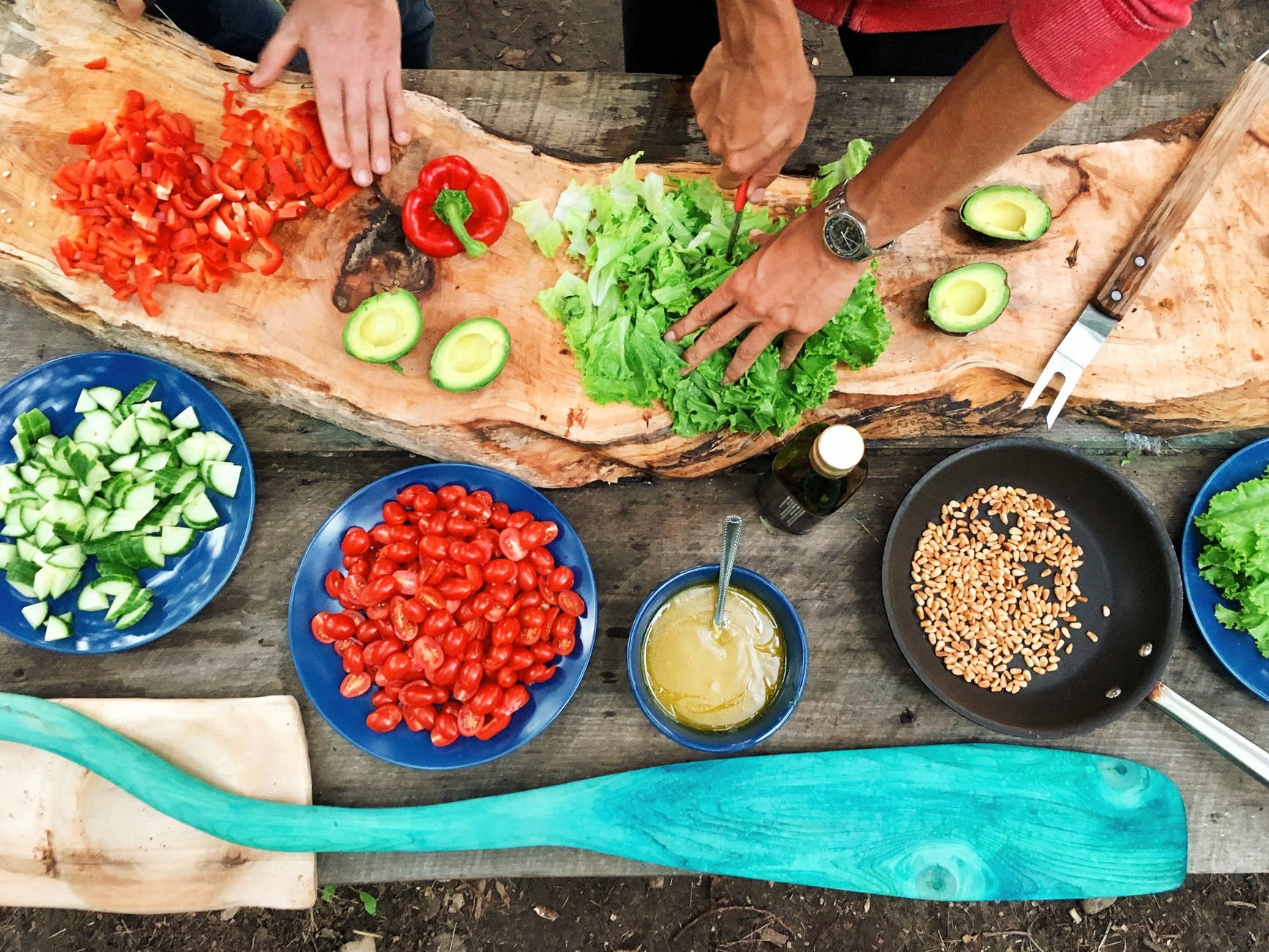
I, myself, am a self-professed foodie. Unsurprisingly, the lockdown/quarantine life has been the perfect time for me to fulfil my New Year’s resolution and spend more time cooking and baking, experimenting with new recipes, and sharing the fruits of my labour with my neighbours. It seems that I am far from the only person who has used these uncertain times to refine their cooking and baking skills. Many people have been sharing their new, delicious (and more or less successful) creations on their social media, though the endless stream of sourdough breads found on timeliness and explore pages has drawn ire from some people as well. Cooking and eating is far from just nourishment to our species, which is a rarity in the animal kingdom. So why is it exactly that humans have developed such a foodie culture?

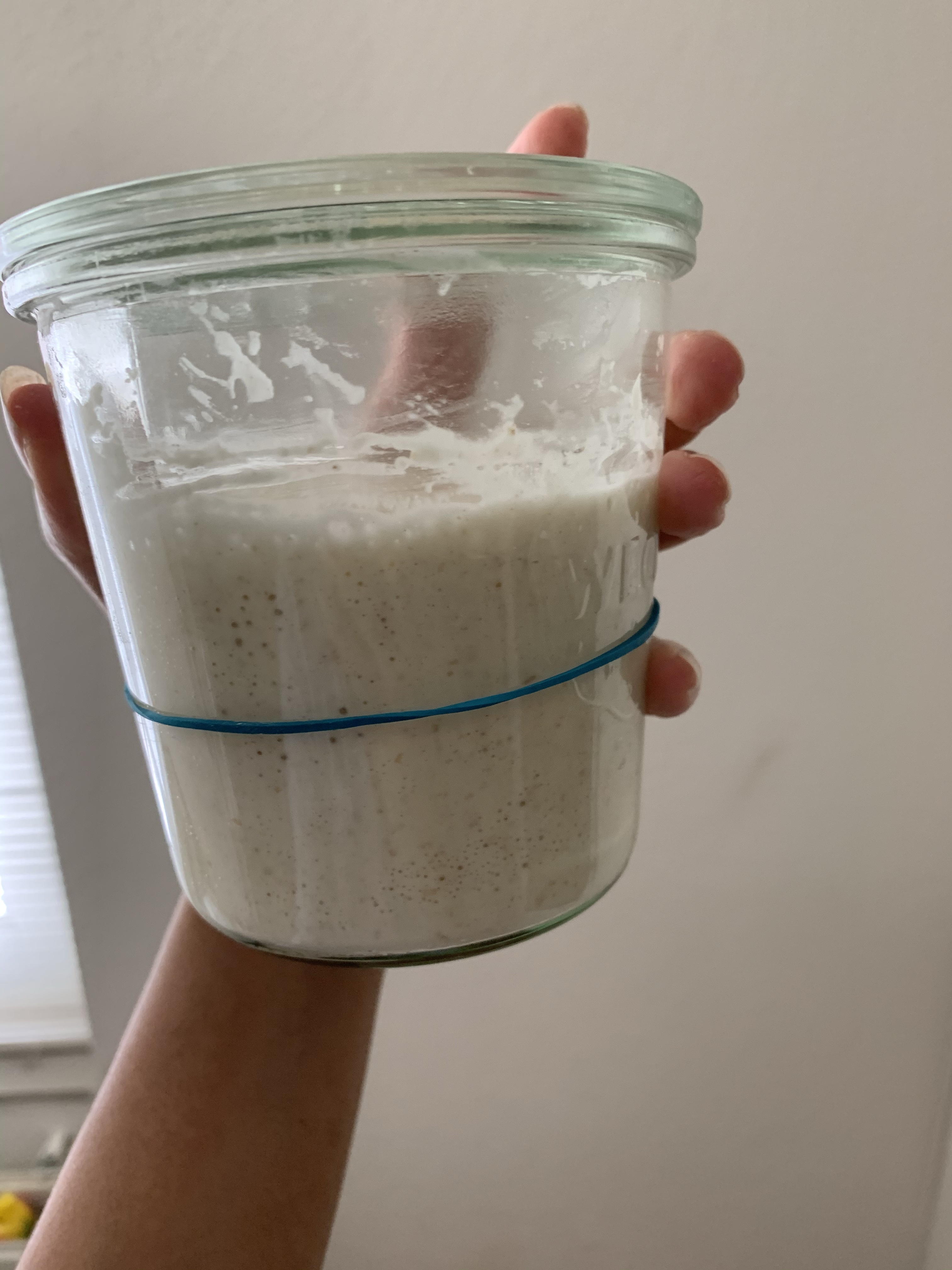
During this time of quarantine I, too, have started creating my own sourdough starter. Her name is Prof Marie Curyeast.

Chimpanzees and gorillas have a rather monotonous diet compared to us, even though they are our closest living relatives. Drs Karina Fonseca-Azevedo and Suzanna Herculano-Houzel, Brazilian neuroscientists, have researched the possible reasons we, as humans, have such large brains compared to our other primate cousins. Their research suggests that perhaps our large brains compared to both our bodies and our primate cousins’, might be a result of having learnt how to use fire to cook. As brains are energy intensive organs, many raw-food-eating primates have to spend more of their time eating than humans do. Moreover, a primate living off of raw food with a brain of our size would probably spend most of their waking hours eating. Perhaps, then, cooking, which causes us to take up many more calories in one go than consuming solely raw foods would, has been an evolutionary trade-off making our bodies smaller, our brains larger, and our feeding time more special.

Dr Julie Mennella, amongst others, has done research on how children develop preference for certain foods. Her research suggests that children innately have a preference for sweet things and a dislike for bitter things, as a result of our evolutionary history. Furthermore, her research suggests that we learn about our food preferences through exposure in utero and, for breastfed babies, through breastmilk. Though later on babies on solid food can learn to like foods they initially dislike through repeated exposure. In the Season 2 episode of Babies on senses, Dr Mennella rightly points out that for human beings, ‘food is much more than a source of nutrients or a source of calories. It gives us pleasure.’

So perhaps our culinary endeavours during this unsure time are just ways for us to grasp at something seemingly fundamental to our humanity – where we can see cooking and baking as a form of community, connectedness and comfort, even in darkness and uncertainty.

Evolutionarily there might be a reason we have started to cook more, and science gives us somewhat of a perspective of why we have developed such a foodie culture as a species. There is so much more food means to us on a personal, individual or cultural level than just explained by evolution. The science suggests us that we are already connected and involved in our family’s or culture’s food structure from when we are very little, our tastes ever evolving with the wider scope of exposure to different foods. Cooking can tie us to our family histories, can make us feel connected to those that have gone before us. We can find a kind of grounding and deep humanness in plunging your hands into dough or salad. Food is a way in which we show love and care, through which we maintain social connections with our friends and families. Our recipes are what we pass down to the children in our lives. So perhaps our culinary endeavours during this unsure time are just ways for us to grasp at something seemingly fundamental to our humanity – where we can see cooking and baking as a form of community, connectedness and comfort, even in darkness and uncertainty. The real test will be if we keep up our cravings for nostalgia, comfort and connectedness now lockdowns are easing and people are trying to find a new sense of normality in abnormal times. But one truth remains: food, and subsequently foodie culture, is integral to human nature, in good times and in bad!

The shakiness of our foundations.

mona lisa with face mask
Photo by cottonbro on Pexels.com

Karl Marx wrote that ‘the history of all hitherto existing society is the history of class struggle’. To many people the idea of class struggle seems archaic and belonging firmly to the 20th century. An equally 20th century idea is that of living through a deadly pandemic – a scenario that has for most of us only been conveyed through history books, and a scenario in which we have collectively been thrust by the once-in-a-century unprecedented COVID-19 pandemic. This current pandemic is exposing the problems within our current economic and social systems, and most importantly exposes the fragility of the human right to health. It turns out that the emperor is naked.

Inequalities in access to healthcare between Global North and Global South countries have, rightfully, long been the focus of conversation surrounding global health. Soon after the WHO declared a public health emergency of international concern (PHEIC), the Director General, Dr Tedros, pointed out that this virus could be most lethal and dangerous for countries with weaker health systems, largely (though not uniquely) corresponding to the Global South. Beyond ‘developing’ and conflict-heavy countries with weaker health systems, the current pandemic has exposed the health inequalities that exist within the Global North as well. In many Global North countries, in the years after the crashing down of the neoliberal order, austerity (to varying degrees) has been the go-to policy with public sector jobs being cut, and many people being thrust into unemployment and even poverty. This has had many consequences on health (both mental and physical) and has caused many of our countries to be woefully underprepared for something as catastrophic as a pandemic.

In recent weeks, governments have been calling on ‘essential workers’ and their skills. Many people across the world have been applauding their healthcare staff from their windows, balconies, living rooms and their palaces. We have, rightfully, been supporting ‘essential workers’, but what does that mean when essential workers have been devalued for years within our societies? When many of the people we have elected have been the ones to systematically cut funding for healthcare and the minimum wage is still not necessarily a living one. Many essential workers are in low-paying jobs, and additionally many essential jobs are traditionally feminised roles such as caring professions and domestic and service jobs. This exacerbates already exiting inequalities where they exist.

One of the most effective ways to slow the spread of infectious disease is through social – also called physical – distancing measures such as working from home, staying at home as much as possible, and avoiding close physical contact with other people not part of one’s household. However, for many people, many of whom economically disadvantaged and/or marginalised, this is nearly impossible, increasing the burden of mortality for this group. For many these people working from home is impossible because of the nature of their jobs, staying at home would mean a loss of income and livelihood, and there is a lack of paid sick leave and no (affordable) available childcare.

But beyond income inequality and depletion of resources for many of our health services and the low-wage nature of many essential jobs,, there are other vulnerable groups who will be suffering from increased difficulty in accessing healthcare during the pandemic. An example of this are the homeless who will not have the opportunity to social distance in the same way those with a home do, and who will often not be able to access quality healthcare as easily. Another example of a vulnerable group who might experience more difficulty are prisoners. Prisons are often not adept at containing major infectious disease epidemics. Thirdly, immigrants and refugees who are currently living in dire conditions in camps and settlements, particularly as these people will likely live in crowded places with poor sanitation and more difficulty to access healthcare. Beyond the elderly and those with underlying conditions, there are so many other people who might be particularly at risk in this time. Many of whom have been neglected by society, but all of whom are particularly at risk of having their human rights abused.

This global pandemic has shown us that, even though health is a human right, it is only as viable and attainable as the strength of our health systems and our care for the most vulnerable in society are.

Health is a human right as recognised in the Universal Declaration of Human Rights. The decade of systematic cuts to our health systems and the secondary effects of austerity of thousands of people working in precarity and dealing with failing living standards have caused us to be woefully unprepared for a catastrophic event like this. This global pandemic has shown us that, even though health is a human right, it is only as viable and attainable as the strength of our health systems and our care for the most vulnerable in society are. In a world where the rich are able to self-isolate in mansions or second homes, and get access to tests even when others can’t, it seems difficult not to imagine there might be an aspect of class strife involved. It seems clear that we won’t be able to return to normal after the pandemic is over. The shaky foundations our systems are built on are not likely to survive in tact after this. It is then up to us to decide what’s next and to prepare for the next pandemic – which will come – in more comprehensive ways such as defending the right to healthcare, increasing its access, funding our health systems, implementing fairer labour policies, and redistributing wealth. We must applaud our essential workers, but we must also not forget them when this pandemic is over and they ask for more than just verbal appreciation. We, after all, are only as strong as the weakest link and at the moment the tower is crumbling.

On the (possible) return of community.

closeup photo of person holding panasonic remote control in front of turned on smart television
Photo by freestocks.org on Pexels.com

The world has been under the spell of the novel coronavirus (COVID-19) first discovered in Wuhan in 2019, which has quickly transformed from a semi-local epidemic to an unprecedented global pandemic. The disease’s epicentre has rapidly shifted from China to Europe, with Italy being the first domino to fall on the continent and many countries following swiftly. At this point Spain and France are (almost) in complete lockdown, and other European countries are contemplating the best course of action.

Public health officials have advised a measure called ‘social distancing‘ – perhaps better called physical distancing – where we are encouraged (or mandated) to avoid large gatherings, work from home, stay home as much as possible, and in many cases are closing schools and businesses altogether. Social distancing has as its main goal the reduction of the spread of disease, and ‘flattening the curve’. ‘Flattening the curve’ is, not unlike ‘social distancing’, a term that has got more attention in the media and popular culture (the graph has gone viral…pun not intended) lately. It refers to how the social distancing measures we take – in particular staying at home – can effectively spread out and slow down the number of infected cases so our health systems can still operate at capacity rather than overburdening the already fragile systems.

These unusual and drastic measures have in many cases, for example in Wuhan, Italy and Spain, brought out the best in people, with neighbours singing and chanting in unison, and neighbourhoods applauding their brave healthcare workers. At the same time, this pandemic has also brought out the internalised hyper-individualisation many Western societies have been experiencing for a long time. Many countries are experiencing empty shelves in supermarkets as people are hoarding products, and people across Europe and the United States are still not quite taking the pandemic seriously and are still going to bars, cafés and other events with a large number of people around.

Indeed, it seems like we are at a juncture where we can either increase our sense of community and solidarity and turn a new leaf, or we can get more entrenched in our internalising of the neoliberal lie that it is every man for himself. In a pandemic situation where community solidarity is essential to our mutual survival, it seems to me clear what the best course of action is. This means, perhaps ironically, to limit physical contact with other people as much as possible. This means checking in on our loved ones and the most vulnerable in our communities (that is: the elderly and those with underlying conditions). The current circumstances can, and in some cases already do, bring us together. In a world of constant distraction, it is perhaps an uncomfortable but nonetheless perfect time to return to the heart of what matters to us as human beings: love and community.

For many Christians around the world, the pandemic coincides with the Lenten season where we deny the flesh, contemplate our fleeting mortality, and try to give alms and care for those in our communities. Contemplation is an essential facet of the Lenten fast. However, beyond the religious, many people have a longing for something more; people long for the knowledge that there is more to life than can be found amidst the hectic and distracting nature of our societies and constant competition within our hyper capitalist contexts. In that moment, a pandemic that asks of us to isolate ourselves and return to our core out of community solidarity, might cruelly be the thing that can bring us back to ourselves and our communities. This is the best possible time to do some shopping for your infirm or elderly neighbours, to spend more time reading, with family, or alone in silence. Now is the time for self-reflection and for deciding how it is we can bring back our connection to our local communities and our central humanity.

Even though it might seem easier, or more pleasant, to be amongst each other in bars, pubs, shops, clubs and cafés instead of at home at a physical distance from our friends, there is little to despair. The act of isolating as much as possible at this time is an act of profound love and care for the least of these, for our neighbours, for those who are working in healthcare and are trying their best to save as many people’s lives as possible.

Within the Latin Church there is an antiphon that is chanted during Holy Thursday which proclaims: ubi caritas et amor, Deus ibi est – where charity and love are, there God is. Even though it might seem easier, or more pleasant, to be amongst each other in bars, pubs, shops, clubs and cafés instead of at home at a physical distance from our friends, there is little to despair. The act of isolating as much as possible at this time is an act of profound love and care for the least of these, for our neighbours, for those who are working in healthcare and are trying their best to save as many people’s lives as possible. Even if you are alone, remembering that where charity and love are, there God is, should bring a sense of profound peace, whatever ‘God’ means to you. So, please, stay at home whenever possible – binge your favourite Netflix shows, read, sit in silence, spend quality time with your loved ones if they live with you. But also check in on your elderly relatives and neighbours, help your chronically ill family, friends and neighbours out with groceries. Help and care for each other. Fight against the voice in your head that says it’s every man for himself. Stand in solidarity…from a sensible distance and without shaking hands!